Security, Support, and Structure: How Memory Care Differs from Traditional Assisted Living
Business Name: BeeHive Homes of Great Falls
Address: 2320 15th Ave S, Great Falls, MT 59405
Phone: (406) 205-4516
BeeHive Homes of Great Falls
At BeeHive Homes of Great Falls in Great Falls, MT, we offer assisted living, respite care, and memory care for people with dementia. Our residents enjoy living in a cozy place with knowledgeable and caring staff. We aim to meet each person's changing care needs and keep residents as independent as possible. We also plan events and senior living activities based on their interests and skills. Contact us immediately to learn more about how we can help your senior today!
2320 15th Ave S, Great Falls, MT 59405
Business Hours
Families often begin taking a look at senior care alternatives after a scare. A roaming event. A stove left on. Medications skipped or doubled. Or a late night call from a next-door neighbor who discovered a parent puzzled at the mailbox.
The next step is hardly ever apparent. Conventional assisted living, memory care, proficient nursing, in home caretakers, respite care for short-lived aid, adult day programs. Labels accumulate much faster than clarity.
I have actually walked families through these choices for years, both as a professional in senior care and as a child who viewed dementia unfold in my own family. The line in between "requiring a little assistance" and "needing a secured environment" is not constantly clear on paper, but it is very clear in everyday life.
This is where the difference between assisted living and memory care really matters.
Starting from the basics: what assisted living actually provides
Traditional assisted living is developed for older grownups who are primarily independent but require aid with certain everyday jobs. Consider it as a home with support wrapped around it.
Residents typically have their own private or semi personal home. Personnel help with individual care such as bathing, dressing, toileting, grooming, and medication management. Meals are supplied, house cleaning is consisted of, and there is typically a calendar of social activities and outings.
The crucial idea is that assisted living aims to protect as much self-reliance and autonomy as possible. Citizens frequently manage their own schedules, reoccur with minimal guidance, and take part in activities by option, not by structured expectation.
This works well for somebody who, for example, has arthritis that makes bathing hard, or heart problem that makes cooking and cleansing exhausting, but who can still ensure decisions and remember their routine.
Once cognitive impairment gets in the photo in a significant method, that model begins to strain.
What "memory care" truly means
Memory care is not just assisted coping with a locked door. At least, good memory care is not. It is a specific environment, normally within its own protected unit or devoted building, designed around the requirements and difficulties of individuals dealing with Alzheimer's disease and other types of dementia.
Several aspects normally change when you move from conventional assisted living into memory care:
First, security goes from "offered if needed" to "actively developed into every minute." Residents may have bad short-term memory, disorientation, or impaired judgment. They might try to leave the structure to "go home," even if they have actually lived there for months. Staff should expect these behaviors, not simply respond to emergencies.
Second, structure becomes a restorative tool instead of basic benefit. The day is formed in a foreseeable pattern: mealtimes, personal care, activities, rest. Predictability lowers stress and anxiety for many people with dementia, who frequently feel unmoored when they can not depend on memory to organize their world.
Third, communication and interaction expectations shift. Staff in memory care are trained to use hints, repeating, streamlined choices, and a calmer rate. The goal is not simply to finish tasks, but to maintain dignity and lower disappointment for someone whose brain no longer processes details the way it used to.
Lastly, the physical environment is altered to support individuals with cognitive impairment: clearer signage, less visual clutter, more contrast in colors, secured outside spaces, careful lighting, and fewer hazards.
On the surface, both memory care and assisted living provide "real estate with assistance." In practice, they run with different presumptions about what citizens can safely do on their own.
Safety: where the differences are most obvious
Families typically first notice the requirement for memory care when safety begins to deteriorate, slowly or suddenly.
In assisted living, safety measures are very important but normally reactive and resident driven. A person pulls an emergency cable if they fall. They request aid if they feel ill. They identify their door number and remember their space. If they want to step outside to walk the grounds, they can.
In memory care, safety is proactive and environment driven. Doors might be secured with keypads. Elevators may need staff codes. Outside areas are generally confined courtyards instead of open campuses. Staff display motion constantly, because locals might not acknowledge dangers or remember guidelines from one moment to the next.
One household I dealt with moved their mother from assisted living to memory care after she roamed out of the building throughout a shift change. She had actually always been a walker and enjoyed fresh air. In assisted living, those independent walks were encouraged, till her dementia advanced and she forgot how to return to her room.
Assisted living personnel did their best, but the building was not developed to track someone who walked off the home within a couple of minutes of distraction. In memory care, that very same desire to stroll developed into a healthy everyday activity in a protected yard, with personnel joining her, not going after her.
Key behavioral security concerns that tend to move the conversation toward memory care include roaming, exit seeking, regular falls connected to confusion instead of pure balance issues, leaving ranges or appliances on, misusing medications, and increased agitation or paranoia in unfamiliar situations.
Traditional assisted living can manage some mild cognitive problems. As soon as disorientation, bad judgment, and repeated risky habits appear, memory care normally offers a much safer framework.
Support: staffing, training, and expectations
The human factor makes or breaks any senior care setting. The difference is not just in how many people are on shift, but in what they are trained to see and how they respond.
In standard assisted living, personnel ratios vary extensively, but the presumption is that residents can request what they need. Staff respond to call lights, deliver set up services, and arrange activities. They sign in, however much of the day depends upon the resident's initiative.
In memory care, staff are trained to lead, hint, and guide. Residents might not request for assistance even when they are struggling, due to the fact that they lack insight or can not discover the words. Personnel rather search for nonverbal hints: a resident hovering near the restroom, somebody pacing before meals, a person with a history of nighttime wandering suddenly peaceful during the day.
Support in memory care also encompasses managing behavioral symptoms. People with dementia may withstand bathing, accuse others of stealing, become suspicious of family, or lash out in pure aggravation. Well trained memory care staff discover methods such as redirection, validation, and breaking tasks into smaller sized steps.
By contrast, in a conventional assisted living setting where personnel absence dementia specific training, those same behaviors can be misinterpreted as "noncompliance" or "hard personality." That typically results in a cycle of conflict, where both resident and caregivers feel disappointed and unsafe.
Medication assistance likewise tends to differ. Memory care teams are more attuned to the effect of medications on cognition, fall threat, and habits. Excellent programs partner closely with geriatricians or neurologists to stabilize symptom control and lifestyle, instead of going after every behavior with a sedative.
Families in some cases presume memory care means more sedating medications. In well run neighborhoods, the reverse holds true: personnel usage structure, engagement, and environmental adjustments initially, and medication changes just when definitely necessary.
Structure: why routine matters more in dementia care
People with healthy cognition can flex their regimens without significant effects. Skip breakfast, take a late nap, go out to dinner, stay up for a movie. They may feel a little off the next day, however they recalibrate easily.
For someone with dementia, interruption typically brings a heavier expense. Missed meals can result in low blood sugar and confusion. Absence of sleep can worsen sundowning and agitation. Too peaceful a day can sustain nighttime pacing. Too disorderly a day can trigger withdrawal or aggression.
Traditional assisted living tends to emphasize choice and versatility. Meal times may be open for a number of hours. Activities are optional drop in events. Citizens might keep their own irregular sleep patterns, particularly if they are night owls or late risers by nature.
Memory care is more tightly structured, not to manage citizens, however to decrease the cognitive load on them. Breakfast follows morning care. There might be a mild group activity mid morning, a more revitalizing one after lunch, then quieter engagement or rest in the afternoon. Evenings are assisted living great falls mt BeeHive Homes of Great Falls frequently calmer, with soothing music or basic social time, to prepare locals for sleep.
This rhythm supports circadian patterns and offers anchors in a brain that can not rely on short-term recall. Rather of asking, "Would you like to come to bingo at 2 pm?" staff frame it as, "Now it's time for our game, let's go together." Fewer open ended options, more directed flow.
One child informed me she felt guilty moving her father from assisted living to memory care due to the fact that "it appeared more restrictive." Three months later, she stated his stress and anxiety had dropped visibly. The predictability of regimens and constant faces in fact made him feel freer. He no longer needed to pretend to handle decisions that overwhelmed him.
That is the peaceful power of structure in memory care. It decreases the consistent demand on harmed cognitive systems, so remaining strengths can surface.
The physical environment: subtle however important design differences
People underestimate how much the environment matters in dementia care. Little details typically spell the distinction in between convenience and persistent distress.
Traditional assisted living buildings are usually created like homes or hotels. Long hallways, standard space numbers, similar doors. Decoration can be classy but visually hectic. Lighting varies. Outside areas might be enjoyable but open.
For someone with dementia, these functions can rapidly end up being disorienting or even frightening.
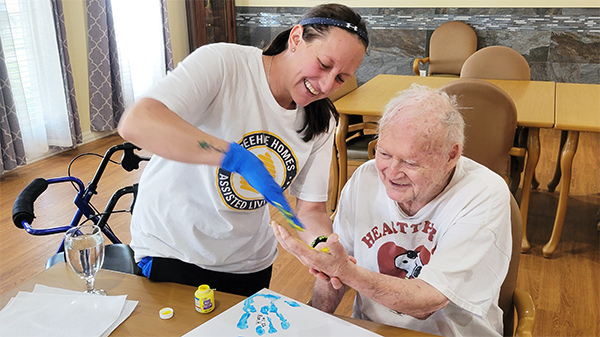
Memory care environments preferably streamline navigation and minimize sensory overload. Some typical style choices consist of:
- Secured boundaries with yards instead of open premises, so residents can walk and take pleasure in fresh air without the risk of getting lost.
- High contrast between floors, walls, and furnishings, assisting homeowners distinguish edges and avoid mistakes, specifically if their visual processing is affected.
- Personalized "shadow boxes" or memory screens outside each room, utilizing photos and things from a resident's life to hint recognition of their own space.
- Clear, large print signage with both words and icons, typically color coded, for locations like restrooms, dining rooms, and activity areas.
Lighting is another crucial distinction. Extreme lighting and deep shadows can trigger misperceptions and fear. Memory care units normally aim for consistent, diffused lighting that decreases glare and eliminates dark corners. Windows are valuable to give a sense of day and night, however blinds and treatments are chosen to avoid confusing reflections in glass at dusk.
These details sound little on paper. In life, they can mean less falls, less agitation, and more capability to move individually within a secure space.
Cost and level of care: why memory care is often more expensive
Families are frequently surprised by the price dive when they move from assisted living to memory care. On the surface area, the room might look comparable and the fundamental guarantees of senior care familiar. So why the greater cost?
The distinction comes from staffing strength, training, and the level of guidance needed. Memory care systems typically have more personnel on the floor per resident, especially throughout high danger hours such as nights and nights. Those staff members typically have additional dementia specific training, and the program may employ customized functions like memory care organizers or activity experts with accreditation in dementia engagement.
The regulatory structure can differ as well, depending on the state. Some states require separate licensing for memory care, with higher standards for security and shows. Compliance with those guidelines includes functional cost.
Finally, the services included tend to be more detailed. In assisted living, a resident may be on a lower service tier if they require aid only with bathing and medication reminders. In memory care, even homeowners with fairly moderate physical requirements typically require full assistance with medication management, cueing for meals, assistance for personal care, hallway tracking, and structured activities.
Families in some cases try to stretch assisted living longer to save expenses. Sometimes that works, especially when dementia advances gradually and behaviors remain moderate. Other times, the hidden cost is paid in duplicated emergency situations, hospitalizations, or family tension that becomes unsustainable.
The role of respite care when you are unsure
Not every family is all set to dedicate to a permanent move to memory care. They might be taking care of a parent in your home and wondering if it is time to transition. Or their loved one is currently in assisted living, and personnel are gently recommending a higher level of support, but the household is hesitant.
Respite care can be a helpful middle step. Lots of assisted living and memory care communities offer short term stays, normally ranging from a few days to a couple of weeks. The resident remain in a supplied house or room, gets the exact same daily care as long term homeowners, and after that returns home or to their previous setting.
For families, respite care serves a number of essential functions. It provides a direct take a look at how a loved one handles a structured environment, without relying solely on tours and sales brochures. It provides short-lived relief for family caretakers, who may be near burnout. And it can work as a practical trial: if a parent thrives in memory care during a respite stay, the decision to move completely feels less like a leap into the unknown.
Respite care slots typically book rapidly, especially around vacations or summer months when household caregivers travel. Preparation ahead helps. Even a one week stay can supply valuable insight into how your loved one reacts to included structure, socializing, and supervision.
When assisted living is enough, and when it is not
There is no single test that turns a switch from "assisted living" to "memory care." Rather, experienced clinicians and senior care specialists take a look at patterns over time.
Assisted living tends to be adequate when an individual has moderate cognitive problems or early dementia but is still oriented most of the time, follows regimens with modest tips, deals with modification without severe distress, and does disappoint unsafe roaming or severe behavioral symptoms.
Memory care normally becomes the better fit when several of the following appear consistently: getting lost in familiar places, leaving home appliances on, repeated falls tied to confusion, paranoid or aggressive behavior that staff in assisted living struggle to handle, frequent nighttime wandering, exit seeking, failure to use the call system reliably, or increased withdrawal because the regular environment overwhelms them.
The psychological side matters also. If a resident in assisted living spends most of the day isolated in their space, puzzled by group activities that move too fast, or embarrassed by their mistakes around more independent peers, memory care can use a neighborhood of individuals experiencing comparable challenges, with activities paced for their abilities.
I have actually seen homeowners who were labeled "resistant to care" in assisted living calm considerably in memory care, just since the expectations matched their cognitive reality.
Family involvement and psychological shifts
Moving a parent into memory care typically feels heavier than moving into assisted living. Households in some cases interpret it as an admission that "things are truly bad now." That emotional weight is genuine, and it makes complex decision making.
The reality is that memory care, when done well, can be a thoughtful action to the specific needs of dementia, not a penalty or last hope. It recognizes that no amount of love can substitute for 24 hour, dementia focused supervision and structure.
Family involvement does not shrink after a transfer to memory care; it shifts. Rather of continuously firefighting crises at home, or fielding duplicated immediate calls from assisted living, relatives can invest their energy in quality time: shared meals, strolls in the safe garden, taking a look at old photos, listening to favorite music.
I frequently motivate households to pay attention to how they feel a month or two after their loved one relocations. Lots of tell me they start sleeping through the night once again. Their own health improves. They can visit as a child or child again, not simply as a caregiver on task. That change benefits the resident too, due to the fact that they sense less anxiety and fatigue from their relatives.
Open communication with personnel is vital in both assisted living and memory care, however it is particularly vital when navigating the behavioral and psychological intricacies of dementia. Share your loved one's history, regimens, activates, and relaxing techniques. Excellent memory care teams weave that details into customized techniques, rather than applying one size fits all routines.
Practical concerns to ask when comparing settings
When you tour neighborhoods, shiny home furnishings and friendly sales staff only inform part of the story. To get a clearer photo, it helps to ask a couple of concentrated questions.
Here is a short list of concerns that frequently expose the real distinctions between assisted living and memory care programs:
- How do you decide when somebody in assisted living should move to memory care, and who is involved in that decision?
- What dementia particular training do your memory care personnel get, and how typically is it refreshed?
- How do you deal with locals who roam, withstand bathing, or end up being agitated in the late afternoon or evening?
- Can you describe a normal day in your memory care system, from awaken to bedtime, consisting of how you adapt it for various capability levels?
- Do you provide respite care stays, and can a brief remain in memory care help us evaluate whether it is an excellent long term fit?
Listen not simply for the material of the responses, however for tone and information. Unclear, generic reactions like "we deal with that on a case by case basis" without examples can indicate limited experience. Specific stories, clear procedures, and noticeable calm on the unit typically show a fully grown program.
Where senior care, security, and self-respect meet
Both standard assisted living and memory care hold essential locations in the senior care landscape. Neither is "better" in the abstract. The ideal option depends upon the interaction between physical health, cognitive changes, personality, and household capacity.
Assisted living uses a supportive environment for older adults who need aid with day-to-day tasks but still direct their own life. Memory care supplies a secured, structured, and specialized setting for those whose dementia makes self direction and unsupervised freedom unsafe.
The goal in both is not to strip away autonomy, but to match self-reliance with safety. For somebody with advancing dementia, that frequently indicates trading some open flexibility for a protected environment where they can still stroll, mingle, and engage without constant danger.
If you are coming to grips with this choice, pay closer attention to patterns than to single bad days. Talk to your loved one's physician about cognitive status and security risks. Visit both assisted living and memory care programs, and if possible, check out respite care to test the fit.
Most of all, keep in mind that seeking the ideal level of care is not a failure of household commitment. It is among the clearest expressions of it.
BeeHive Homes of Great Falls provides assisted living care
BeeHive Homes of Great Falls provides memory care services
BeeHive Homes of Great Falls provides respite care services
BeeHive Homes of Great Falls supports assistance with bathing and grooming
BeeHive Homes of Great Falls offers private bedrooms with private bathrooms
BeeHive Homes of Great Falls provides medication monitoring and documentation
BeeHive Homes of Great Falls serves dietitian-approved meals
BeeHive Homes of Great Falls provides housekeeping services
BeeHive Homes of Great Falls provides laundry services
BeeHive Homes of Great Falls offers community dining and social engagement activities
BeeHive Homes of Great Falls features life enrichment activities
BeeHive Homes of Great Falls supports personal care assistance during meals and daily routines
BeeHive Homes of Great Falls promotes frequent physical and mental exercise opportunities
BeeHive Homes of Great Falls provides a home-like residential environment
BeeHive Homes of Great Falls creates customized care plans as residents’ needs change
BeeHive Homes of Great Falls assesses individual resident care needs
BeeHive Homes of Great Falls accepts private pay and long-term care insurance
BeeHive Homes of Great Falls assists qualified veterans with Aid and Attendance benefits
BeeHive Homes of Great Falls encourages meaningful resident-to-staff relationships
BeeHive Homes of Great Falls delivers compassionate, attentive senior care focused on dignity and comfort
BeeHive Homes of Great Falls has a phone number of (406) 205-4516
BeeHive Homes of Great Falls has an address of 2320 15th Ave S, Great Falls, MT 59405
BeeHive Homes of Great Falls has a website https://beehivehomes.com/locations/great-falls/
BeeHive Homes of Great Falls has Google Maps listing https://maps.app.goo.gl/1z93HCVXHyRSY9gU6
BeeHive Homes of Great Falls has Facebook page https://www.facebook.com/beehivehomesgreatfalls
BeeHive Homes of Great Falls has an Instagram page https://www.instagram.com/beehivehomesofgreatfalls
BeeHive Homes of Great Falls won Top Assisted Living Homes 2025
BeeHive Homes of Great Falls earned Best Customer Service Award 2024
BeeHive Homes of Great Falls placed 1st for Senior Living Communities 2025
People Also Ask about BeeHive Homes of Great Falls
What is BeeHive Homes of Great Falls Living monthly room rate?
The monthly cost for assisted living, memory care, or senior care in Great Falls, MT depends on the level of care needed. Each resident receives a personalized assessment, and pricing is based on that evaluation. BeeHive Homes is known for clear, transparent pricing with no hidden fees
Can residents remain at BeeHive Homes as their care needs change?
In many cases, yes. BeeHive Homes of Great Falls is designed to support residents as their needs evolve, whether that means increased assistance with daily living or transitioning to memory care within the BeeHive network. Residents may remain as long as their needs can be safely met without 24-hour skilled nursing
What types of senior care are offered at BeeHive Homes of Great Falls, MT?
BeeHive Homes of Great Falls provides a range of care options, including assisted living, memory care, respite care, and specialized traumatic brain injury (TBI) assisted living care. Care is offered across eight (8) residential-style BeeHive Homes located throughout the Great Falls community, each designed to support a specific level of care
What is Traumatic Brain Injury (TBI) assisted living care?
Traumatic Brain Injury assisted living care is designed for individuals who need daily support following a brain injury but do not require 24-hour skilled nursing. At Fireweed Home, BeeHive Homes of Great Falls provides structured routines, personalized assistance, and consistent supervision tailored to the unique needs associated with TBI
Can families tour BeeHive Homes of Great Falls?
Absolutely! Families are encouraged to schedule a tour to learn more about assisted living, memory care, and senior living in Great Falls, MT. To arrange a visit or speak with our team, please call (406) 205-4516
Where is BeeHive Homes of Great Falls located?
BeeHive Homes of Great Falls is conveniently located at 2320 15th Ave S, Great Falls, MT 59405. You can easily find directions on Google Maps or call at (406) 205-4516 Monday through Sunday Open 24 hours
How can I contact BeeHive Homes of Great Falls?
You can contact BeeHive Homes of Great Falls by phone at: (406) 205-4516, visit their website at https://beehivehomes.com/locations/great-falls, or connect on social media via Facebook or Instagram
Take a short drive to the Roadhouse Diner . The Roadhouse Diner offers classic comfort food that makes dining enjoyable for residents in assisted living or memory care during senior care and respite care outings.